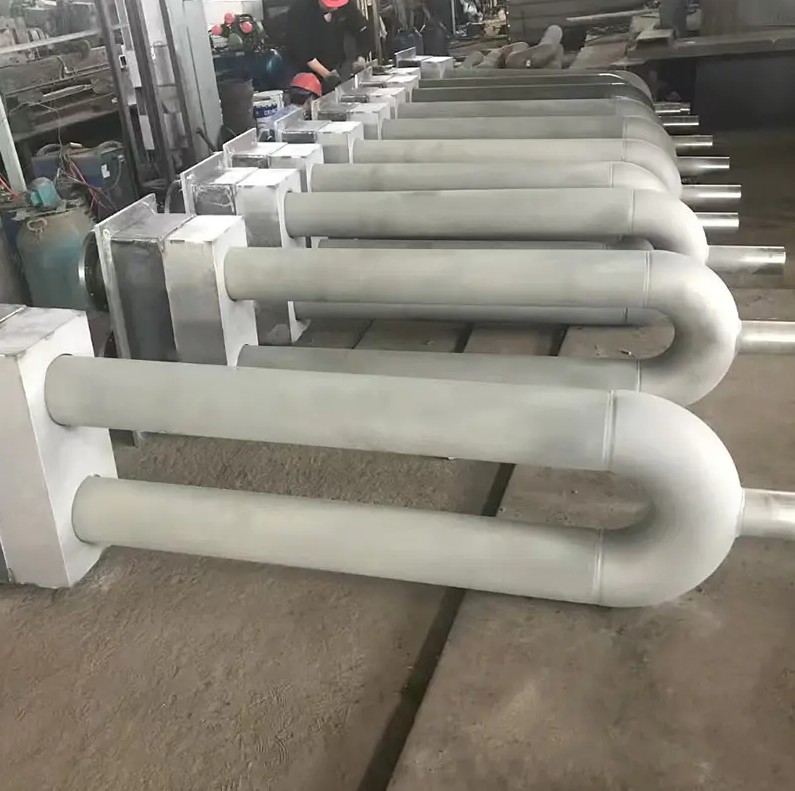
방사형 튜브 히터는 밀폐된 금속 튜브 내부에서 연료를 연소시키고 그 열 에너지를 그 아래의 물체, 사람 및 바닥에 직접 방출하여 따뜻함을 생성하는 가스 연소 적외선 가열 시스템입니다. 건물의 전체 공기량을 데우는 강제 공기 유닛 히터와 달리 복사 튜브 히터는 단단한 표면에 도달할 때까지 직선으로 이동하는 적외선...
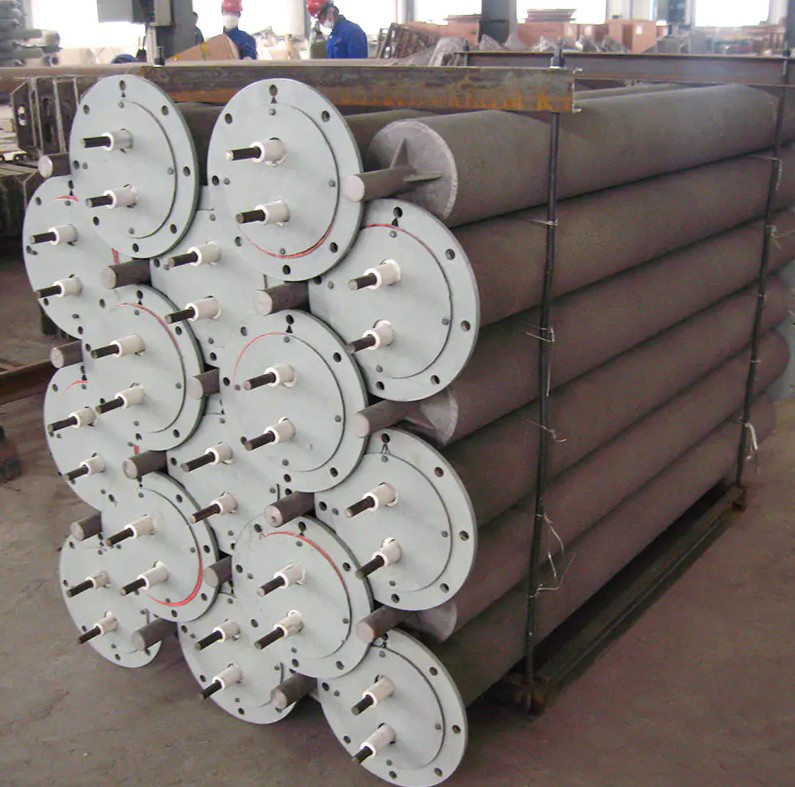
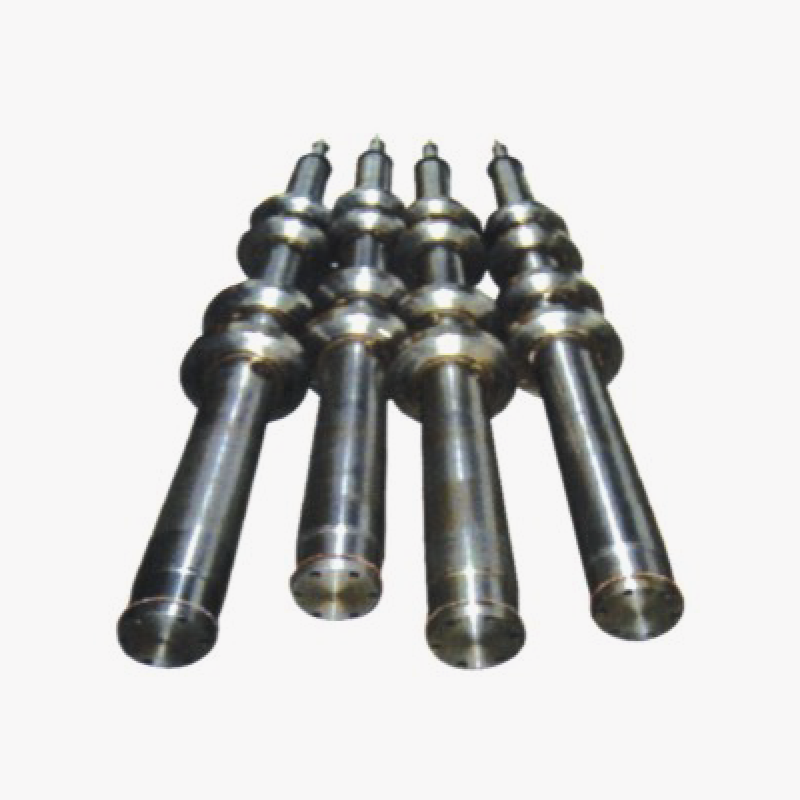
READ MOREA furnace roller — also called a furnace roll — is a rotating cylindrical component installed inside industrial continuous furnaces to support, convey, and transport materials (such as steel strips, glass sheets, ceramic tiles, or other flat products) through the high-temperature processing zone. Furnace rollers form the moving conveyor surface inside the furnace, operating continuously under simultaneous exposure to extreme heat, heavy mechanical loads, thermal cycling, atmospheric corrosion, and wear from the materials passing over them. Because they must perform reliably at temperatures ranging from 700°C to over 1,300°C depending on the furnace type, furnace rollers are engineered from specialised high-temperature alloys and ceramics to withstand high-temperature fatigue, oxidation, hot corrosion, and abrasive wear over extended service lives.
Furnace rollers serve three interconnected functions within a continuous furnace that together determine the quality of the heated or processed product:

The operating environment inside an industrial furnace is one of the most demanding in manufacturing. Furnace rollers must simultaneously withstand multiple destructive mechanisms that are individually severe and collectively challenging to engineer against.
Furnace rollers rotate continuously under load at high temperatures. The combination of mechanical stress (from the weight of the product and their own weight) and thermal stress (from temperature gradients within the roller body) generates cyclic fatigue loading. Steel rollers operating at 900°C–1,100°C are exposed to creep — the time-dependent permanent deformation that occurs when metals sustain stress at elevated temperatures. A roller that creeps will develop a permanent bow (deflection from the horizontal), causing uneven support of the conveyed material and eventually contact with the furnace structure. High-temperature fatigue resistance — the ability to sustain cyclic loading at elevated temperature without fatigue crack initiation or creep deformation — is therefore a primary material selection criterion.
The furnace atmosphere is typically a controlled mixture of air, combustion gases, nitrogen, hydrogen, or reactive atmospheres depending on the process — and all of these atmospheres attack metallic roller surfaces to varying degrees. At high temperatures, oxygen reacts with the roller surface to form oxide scales; sulphur-containing gases attack through hot corrosion mechanisms that are far more aggressive than simple oxidation; carbon monoxide can carburise steel roller surfaces; and hydrogen atmospheres can embrittle certain alloy compositions. Oxidation-resistant roller alloys form adherent, slow-growing protective oxide scales (typically Al₂O₃ or Cr₂O₃) that act as diffusion barriers, dramatically reducing the rate of continued oxidation.
Materials conveyed through a furnace — hot steel strip, glass, ceramics, or fired clay products — contact the roller surface under load. Steel products may transfer adherent oxide scale (known as build-up or accretion) onto the roller surface; this build-up grows progressively and eventually causes surface defects on the conveyed product. Glass and ceramics abrade roller surfaces through direct contact. Both mechanisms degrade roller surface geometry and texture, reducing service life and compromising product quality. Wear-resistant surface treatments, coatings, or material selections that minimise adhesion and maximise surface hardness at temperature are key responses to this challenge.
Furnace rollers are exposed to thermal shock when the furnace is started up from cold, during planned or unplanned shutdowns, and when cold material enters a hot furnace zone. Rapid temperature changes create large thermal gradients within the roller body, generating internal stresses that can cause cracking — particularly in ceramic rollers or ceramic-coated metallic rollers where the thermal expansion mismatch between coating and substrate must be carefully managed.
The choice of roller material is the most critical engineering decision in furnace roller selection, and must balance temperature capability, corrosion and oxidation resistance, mechanical strength, thermal stability, and cost over the expected service life.
Cast iron- and nickel-based heat-resistant alloys — including high-chromium cast iron, HK-40, HP-modified alloys, and similar austenitic iron-nickel-chromium compositions — are widely used for furnace rollers operating in the 900°C–1,100°C range. These alloys derive their high-temperature strength from a combination of solid solution strengthening (chromium, nickel, and other elements in the austenitic matrix) and carbide precipitation that stabilises grain boundaries against creep. Chromium contents of 20–35 wt% provide the alumina or chromia scale formation needed for oxidation resistance.
For the most demanding furnace applications approaching or exceeding 1,100°C — including high-temperature annealing furnaces, sintering furnaces, and direct reduction iron (DRI) furnaces — nickel-base superalloy rollers provide superior creep resistance and oxidation resistance compared to iron-based alloys. The combination of γ' precipitate strengthening and alloying with chromium, aluminium, and reactive elements enables these materials to maintain structural integrity at temperatures where iron-based alloys would creep catastrophically.
Silicon carbide ceramic rollers are used in the glass manufacturing industry (float glass and flat glass tempering lines) and in ceramic tile kilns at temperatures up to 1,350°C. SiC offers exceptional thermal shock resistance (critical in glass processing where cold glass enters a hot furnace), very high hot hardness that resists abrasive wear from ceramic or glass products, good oxidation resistance, and a low coefficient of thermal expansion that minimises thermal distortion at operating temperature. SiC rollers are brittle — they cannot sustain significant point loads or impact — but their surface hardness and temperature capability exceed those of metallic rollers for specific high-temperature applications.
Composite furnace rollers use a metallic core (typically a heat-resistant alloy) with a ceramic coating or composite sleeve applied to the roll body surface. The metallic core provides mechanical strength, ductility, and resistance to heavy loads; the ceramic surface layer provides hardness, wear resistance, and oxidation protection. Thermal spray coatings (including HVOF-applied tungsten carbide and plasma-sprayed oxide ceramics) and diffusion aluminide coatings are commonly applied to metallic roller substrates to extend service life in specific wear or corrosion environments.
Furnace rollers are used across a wide range of industrial continuous furnace types, with roller material and geometry specification varying by the temperature, atmosphere, load, and product requirements of each application.
| Furnace Type | Typical Operating Temperature | Conveyed Material | Typical Roller Material |
|---|---|---|---|
| Steel continuous annealing furnace | 700°C–900°C | Cold-rolled steel strip | Heat-resistant cast alloy, HK/HP grades |
| Hot strip mill reheating furnace | 1,100°C–1,300°C | Steel slabs and billets | High-alloy heat-resistant steel or Ni-base |
| Glass tempering furnace | 650°C–750°C | Flat glass sheets | Fused silica, SiC, or ceramic-coated |
| Ceramic tile kiln | 1,100°C–1,300°C | Green ceramic tiles | Silicon carbide (SiC) ceramic |
| Aluminium strip annealing furnace | 450°C–600°C | Aluminium strip and sheet | Heat-resistant alloy or coated metallic |
| Galvanising line jet cooling section | Up to 850°C | Galvanised steel strip | Cast heat-resistant alloy with hard surface |
Selecting the correct furnace roller for a specific application requires defining several key dimensional and performance parameters that directly affect support capability, deflection under load, and service life.
Understanding furnace roller failure modes helps engineers specify rollers correctly and plan maintenance intervals that prevent unplanned furnace outages — which are extremely costly in continuous production operations.
The most common failure mode for metallic furnace rollers, particularly in high-temperature zones. The roller gradually develops a permanent bow due to creep under the combined weight of the roller body and conveyed material. A bowed roller creates an uneven conveying surface, causes product waviness or warping, and eventually contacts adjacent furnace structure. Creep-bowed rollers must be replaced before the bow exceeds the maximum allowable deflection limit.
In steel processing furnaces, iron oxide scale from the strip or slab surface adheres to the hot roller surface and accumulates over time, forming hard nodular deposits (accretions) that are bonded to the roller surface. These deposits create surface irregularities that mark the product and eventually cause product rejection. Accretion is managed by periodic roller cleaning (mechanical or chemical) and by selecting roller materials or coatings that minimise oxide adhesion.
Rapid temperature changes — during furnace startup, shutdown, or when cold material enters a hot zone — generate thermal stresses in the roller body that can initiate surface cracks. In ceramic rollers, thermal cracking may propagate rapidly if the roller is notch-sensitive. In metallic rollers, surface oxidation and hot corrosion interact with thermal fatigue to produce a network of surface cracks (thermal fatigue crazing) that progressively deepen and eventually require roller replacement.
Sustained operation in corrosive furnace atmospheres progressively reduces the wall thickness of metallic rollers through oxidation and hot corrosion. The oxide scale formed on the roller surface spalls periodically under thermal cycling stresses, exposing fresh metal to renewed attack. Over many operating hours, this mechanism reduces the effective cross-sectional area of the roller body, reducing its creep resistance and structural load-bearing capacity.
Furnace roller replacement is one of the most significant planned maintenance activities in continuous furnace operations, requiring furnace shutdown, significant labour, and high-value replacement parts. Effective service life management minimises both unplanned failure costs and premature scheduled replacement.
방사형 튜브 히터는 밀폐된 금속 튜브 내부에서 연료를 연소시키고 그 열 에너지를 그 아래의 물체, 사람 및 바닥에 직접 방출하여 따뜻함을 생성하는 가스 연소 적외선 가열 시스템입니다. 건물의 전체 공기량을 데우는 강제 공기 유닛 히터와 달리 복사 튜브 히터는 단단한 표면에 도달할 때까지 직선으로 이동하는 적외선...
READ MORE대형 창고, 항공기 격납고 또는 분주한 공장 현장을 관리하는 경우 천장에 설치된 난방 시스템 아래를 걸어가면서 일부 공간은 즉시 따뜻하게 느껴지지만 다른 공간은 온도 조절 장치가 목표 온도를 등록한 후에도 오랫동안 머리 높이에서 여전히 차가움을 유지하는 것을 발견했을 것입니다. 그 차이는 종종 열이 전달되는 방...
READ MORE고온 합금 파이프는 특수하게 제조된 합금(일반적으로 니켈, 크롬 또는 코발트 기반 구성)으로 제조된 금속 튜브로, 구조적 강도를 유지하고, 산화에 저항하며, 표준 탄소 또는 스테인레스강 파이프가 파손될 수 있는 극심한 열에 지속적으로 노출되는 크리프 변형을 견디도록 설계되었습니다. 이 파이프는 작동 온도...
READ MORE방사형 튜브에는 일산화탄소 및 기타 연도 가스를 포함한 연소 부산물을 밀봉된 튜브에서 안전하게 제거하고 적절한 크기의 연도 또는 굴뚝 연결을 통해 건물 외부로 배출하기 위한 전용 배기 시스템이 필요합니다. 연소는 가열된 공간의 야외가 아닌 밀폐된 튜브 내에서 완전히 발생하기 때문에 작동하는 배기 경로는 ...
READ MORE